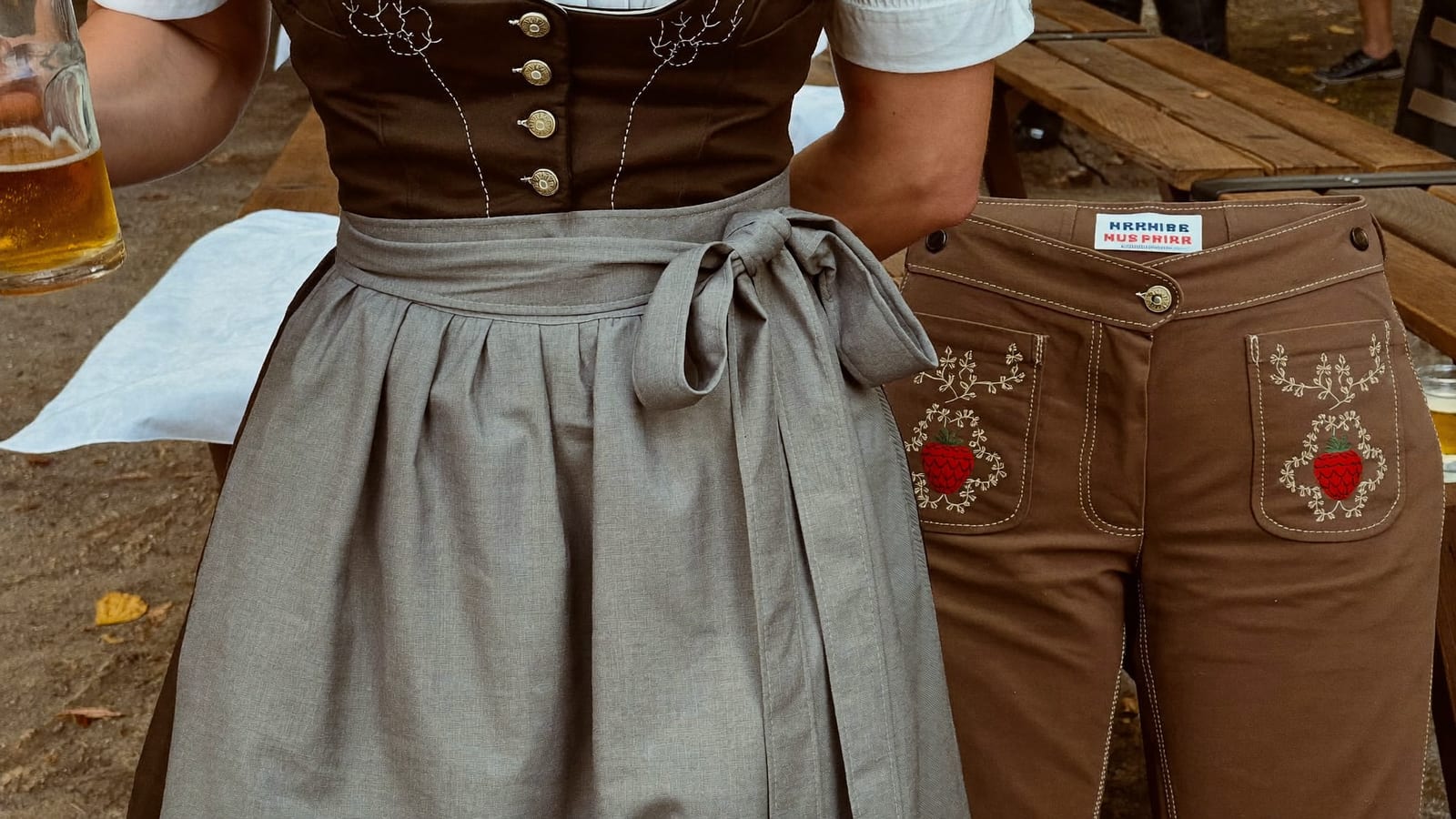
Quick answer: wear Tracht. A dirndl (blouse, dress, apron) or lederhosen (leather shorts, checked shirt, braces, sturdy shoes). Buy the best you can afford in natural fabrics, keep the length below the knee for a classic dirndl, and tie the apron bow on the correct side. Munich in late September is 18°C by day and 9°C at night, so plan a jacket into the look.
Why the costume version stands out
Oktoberfest is one of the few festivals on earth with a genuine dress code, and locals wear it seriously. The cheap costume-shop version is spotted instantly: shiny polyester, a hem that stops mid-thigh, a plastic apron, lederhosen in fake suede. You will not be refused entry, but you will be dressed as a tourist rather than a guest.
The good news: proper Tracht is reusable for a lifetime, and it holds its value.
The dirndl, part by part
| Part | What to look for |
|---|---|
| Blouse | Cotton, cropped at the ribs, puff or capped sleeve. It should sit under the bust, not below it |
| Dress | Natural fabric, fitted bodice, hem at or below the knee for a classic look |
| Apron | Silk or cotton, tied at the waist, colour contrasting the dress |
| Shoes | Ballet flats, low block heels or clean boots. Grass, gravel and beer make heels a bad idea |
| Jacket | A knitted Janker or wool cardigan for the evening |
The apron bow carries meaning. Tied on the wearer's left means single, on the right means taken, at the back means widowed or serving staff, and at the front centre traditionally means a virgin, which is why almost nobody uses it. Get it right and you avoid a very repetitive conversation.
Lederhosen, part by part
Real lederhosen are deerskin or goat suede and get better with age. Look for a proper leather waistband, hand-stitched detailing and braces that attach with a front bridge. Pair with a checked or plain white shirt, thick loden socks or Loferl, and Haferl shoes.
Short or knee-length is a matter of preference. Knee-length is warmer and reads slightly more traditional; the short version is more common at the tents among younger crowds.
The details people get wrong
- A blouse worn over the dirndl instead of under it.
- Sports trainers. Common, and they immediately break the outfit. Clean leather shoes or boots are the better call.
- Cheap synthetic aprons that will not hold a bow by midday.
- Forgetting the evening. The tents are warm, but the walk across the Theresienwiese at midnight in September is cold.
- A big bag. Bag rules at Oktoberfest are strict: small bags only, roughly three litres. Take the smallest thing that holds phone, cash and ID.
Renting versus buying
Rental is a sensible first move if you are going once: a good rental beats a bad purchase. If you go regularly, buy. A well-made dirndl or pair of lederhosen lasts decades, and the price per wear falls fast.
Frequently asked questions
Do I have to wear Tracht to Oktoberfest? No, but the large majority of the crowd does, and jeans in a tent makes you the odd one out.
What colour dirndl should I choose? Anything, though deep reds, greens and blues photograph best in tent light. Save pastels for daytime.
How cold does Oktoberfest get? Munich in late September averages 18°C by day and 9°C at night. The tents are hot; the walk home is not.
Can men wear a dirndl or women lederhosen? Increasingly common at the tents, and nobody blinks.
Read the full Oktoberfest festival guide for weather, bag rules and what the crowd looks like day by day.