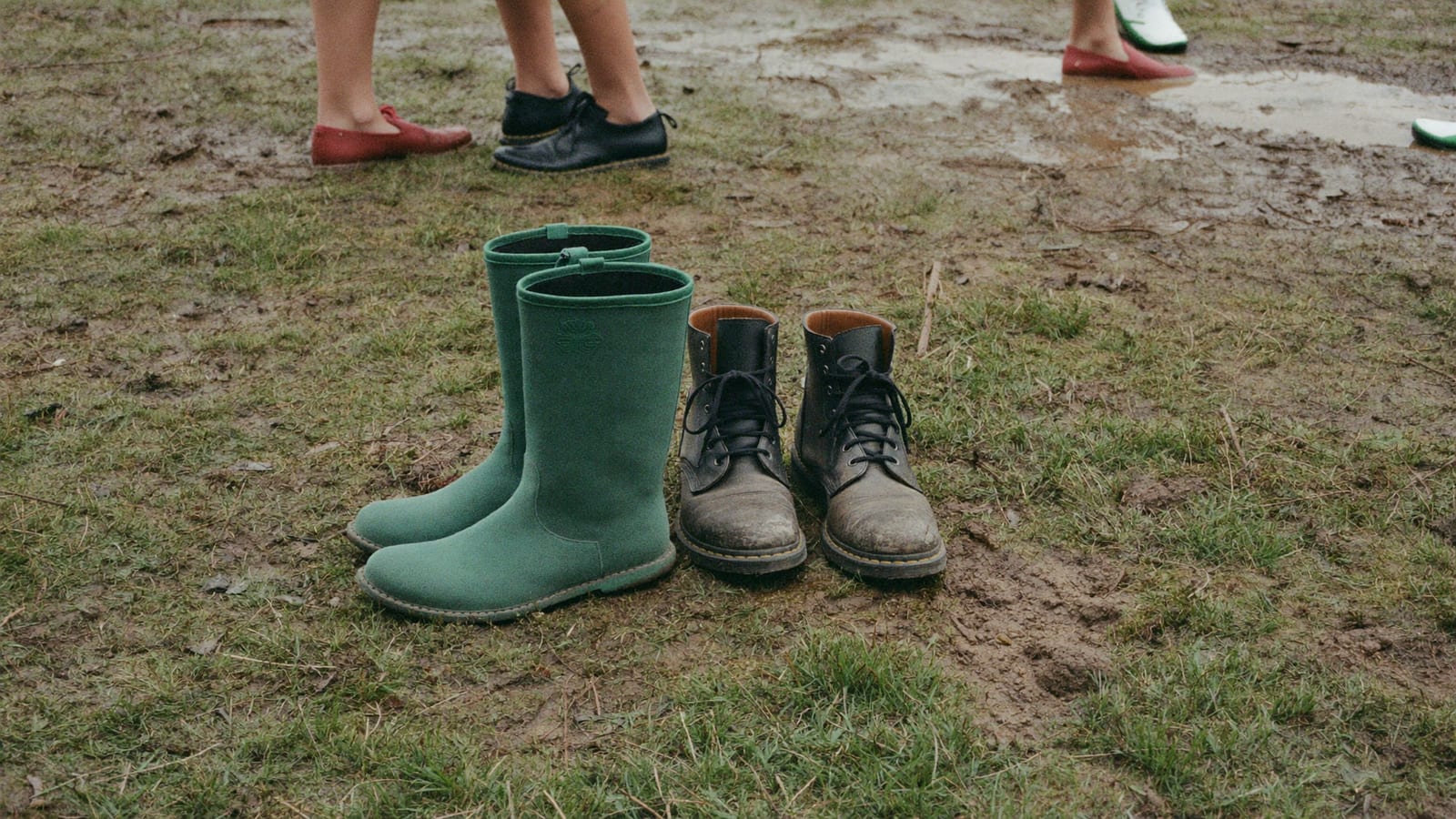
You will walk 15.000 to 30.000 steps a day at a large festival, stand for hours on ground that is rarely flat, and do it again tomorrow. Footwear is the only garment that can genuinely end your weekend, so pick it from the ground up.
Grass fields with rain risk (most of northern Europe)
Wear: wellington boots or waterproof lined boots. Why: a field holding 60.000 people turns to mud within hours of rain, and it does not dry. Failure mode: unlined rubber boots get cold and clammy after a full day. Wear thick socks, and bring a second pair. The compromise: trainers for a dry day one, wellies in the tent for when it turns. Regulars carry both.
Dry fields and city parks
Wear: broken-in trainers or a low boot with a cushioned sole. Why: dry grass becomes hard-packed dust and lumpy ground. Support matters more than waterproofing. Failure mode: canvas trainers with no cushioning. Fine for three hours, painful for ten.
Desert
Wear: closed boots or trainers you accept will change colour. Why: fine dust gets everywhere, and hot sand plus bare skin is an unforced error. Failure mode: open sandals. The dust dries your feet out and the ground is hotter than it looks.
Beach
Wear: flat sandals or rubber slides for the day, trainers for night stages. Why: sand ruins anything with a rough weave, and salt water finishes it. Failure mode: pebble beaches. Zrće in Croatia is not sand, bare feet last about a minute.
Concrete, arenas and industrial sites
Wear: the most cushioned shoe you own. Why: concrete is unforgiving in a way grass is not. Ten hours standing on it is a different kind of tiredness. Failure mode: thin-soled fashion boots. They look right and hurt by 7pm.
Mountains and forests
Wear: trail runners or lightweight hiking boots with grip. Why: slopes, roots and mud, plus weather that changes faster than you can get back to the tent. Failure mode: flat soles on a wet slope.
Snow
Wear: insulated, waterproof snow boots. Why: cold comes up through the sole first. Thin soles are the reason people leave early at winter festivals.
The rules that apply everywhere
- Break them in. Two long walks minimum. This is not optional.
- No heels. Platforms give you height with a surface area that works on soft ground; a stiletto sinks and a block heel wobbles on gravel.
- Nothing white you care about. White trainers are a one-festival garment.
- Bring the second pair. Even if it lives in the car. Especially if you are camping.
- Tape, before the blister. Blister plasters applied at the first hot spot save the day; applied after, they buy an hour.
What about the outfit?
Boots have quietly become the default festival shoe across every genre, because they solve the ground problem without looking like equipment. Cowboy boots at country and desert festivals, combat boots at rock and techno, wellies at British fields, chunky platform boots at raves. If you cannot decide, a broken-in ankle boot works at more festivals than any other single shoe.
Check your festival's own guide for the terrain and rain risk before you buy anything, those two numbers make the decision for you.